Tuesday, September 8, 2015

New reef discovered off Australia's south coast rivals the Great Barrier Reef

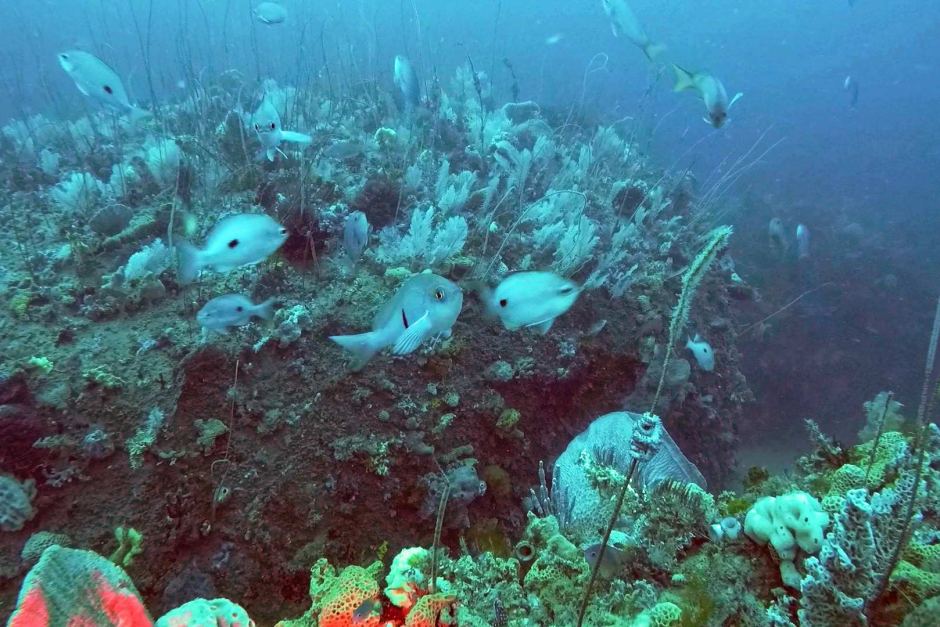
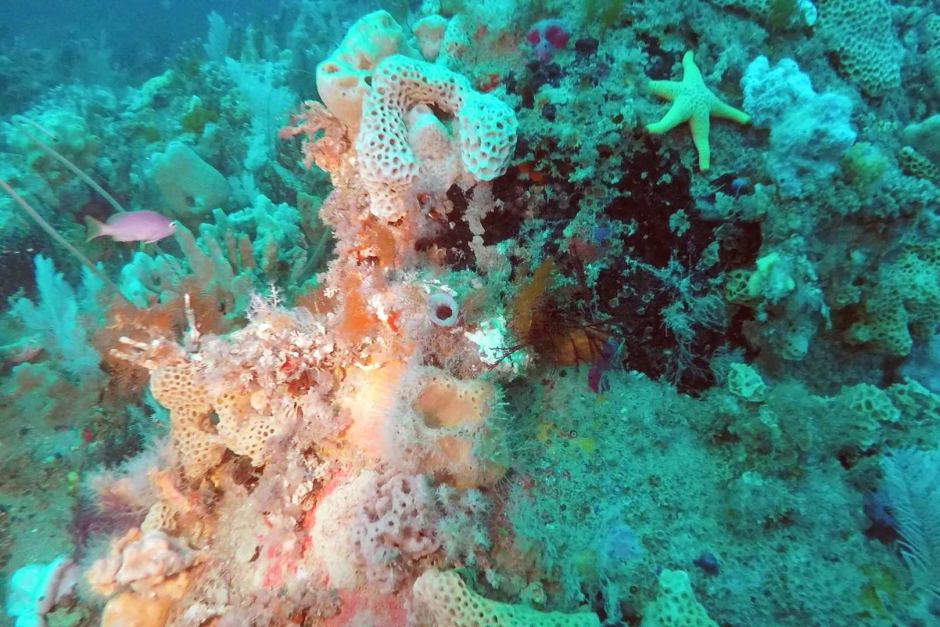
Scientists have discovered a never-before-seen coral reef off the southern coast of Australia, and they claim that its diversity of colourful coral, sponges, and abundant fish species could rival the UNESCO World Heritage-listed Great Barrier Reef.

The reef was found in the deep, chilly waters off the coast of Wilson's Promontory National Park, which is 157 km south east of Melbourne and is already known for its beautiful terrestrial ecosystems. But up until now scientists hadn't been able to explore the ocean terrain, which is a lot deeper than Queensland's Great Barrier Reef
6717018-3x2-940x627

The discovery was made by remotely operated vehicles, or ROVs, which were able to travel to depths of 100 metres and record footage of what they encountered with attached underwater cameras. Researchers from Parks Victoria had previously mapped the national park's sea floor from above the surface and had seen evidence of some interesting underwater structures, but this is the first time they'd sent cameras down to explore. And they definitely weren't expecting to find this. 
During the three-day expedition, the ROVs also revealed massive coral fans, giant holes 90 m deep filled with schools of fish, boulders the size of houses, underwater caves, and 30-metre high sand dunes.
“The resulting footage shows that the deep reef habitats are teeming with life and are home to rich and abundant marine ecosystems that are comparable to Australia’s better-known tropical reef areas," Parks Victoria marine science manager Steffan Howe said in a press release. "The extent and abundance of spectacular sponge gardens and corals is a particularly exciting find."
In addition to the stunning coral life, the underwater robots captured footage of rare fish species, including the Australian barracuda and Longsnout Boarfish, which suggests that they could be thriving in the ecosystem. Howe also told The Huffington Post that he wouldn't be surprised if they found some entirely new species in the area. 
"We’re still analysing a lot of the video footage, which will take some time," he said. "But given the diversity of the marine life we’ve seen, I wouldn’t be surprised if there were some species that we haven’t seen before."
The best part is that this new reef is protected by the Wilson's Promontory Marine National Park, and is pretty inaccessible, so won't be flooded by tourists any time soon. Howe admitted that for now the priority is to gain information to "minimise impact and threats to these sort of communities".
But they do want to encourage diving once they've mapped out which parts of the reef are safe, in order to help explore the underwater ecosystem further. "We really hope that this will stimulate a lot of interest amongst divers and give them some appetite to explore this area," said Howe.
In the meantime, we can enjoy this incredible footage and images of this underwater world, captured by the ROVs during the expedition.

6717002-3x2-940x627

Monday, September 7, 2015


                                  REASEARCH

                                                            Bug's Digestion System.

Bug Stops Food Halfway Down Its Gut to Make Room for Microbes by Ed Yong Your gut is a long continuous tube. Food goes in one end, gets digested and stripped of nutrients, and is shunted out the other end. That’s the case in ants and elephants, lions and sea lions, hawks and hawk moths. But not in stinkbugs. In the guts of these sap-sucking, shield- shaped insects, food goes in one end, gets digested and stripped of nutrients… and then stops. It never flows into the back half of the gut. That end of the organ has been transformed from a site of digestion,into an apartment complex for microbes.


Our guts are full of bacteria and other microbes too, but they live among the currents of food and help us to digest our meals. The stinkbugs have a very different arrangement. Their guts consist of several chambers in a row. The first three (M1, M2, and M3 in the diagram) are for storing and digesting food, and absorbing nutrients. The fourth (M4 and M4B) consists of many branching sacs and crypts, all densely filled with symbiotic bacteria. Stinkbug gut. Credit: Ohbayashi etal, 2015. PNAS
Now, Tsubasa Ohbayashi and Yoshitomo Kikuchi from Hokkaido University in Japan have discovered that this separation is enforced by a special organ—an extremely narrow corridor (CR in the diagram) that separates the third and fourth chambers. It’s thin and inconspicuous, which is why no one had noticed it before. But it plays a vital role: it allows certain bacteria to colonise the back half of the gut, while keeping food and other microbes in the front half.


This discovery speaks to two of the most important sides to the wide- ranging partnerships between animals and microbes. The first is conflict. Even beneficial bacteria aren’t an inherent good. They have their own evolutionary interests and can cause severe problems for their hosts if they get into the wrong body parts. So, they need to be contained and controlled. We do so with a wall of mucus that coats our guts, and with immune cells that patrol that wall. Other animals have special compartments, in which they house their bacteria. The back half of a stinkbug’s gut is one example of such specialised living quarters.That brings us to the second issue:


selectivity. The microbes that live in animal bodies aren’t just the same ones the surrounding environment. Only some species have the abilities to thrive in an animal host, and only some are allowed to do so. In stinkbugs, just one bacterium called Burkholderia can colonise the gut. (It’s not entirely clear what Burkholderia does for its host, but we know that it’s important because bugs that don’t encounter it can’t reach their full size and die early.) The stinkbugs’ newly discovered corridor is responsible for this extreme selectivity. It’s a symbiont sorter. Last year, Kikuchi’s team fed young bean bugs with Burkholderia that had been labelled with a glowing green molecule. They saw that the bacteria formed a queue at the entrance of the narrow corridor and, over several hours, slowly squeezed through. Only Burkholderia does this. Other bacteria can’t make the same journey. Neither can food or liquid. 

More recently, the team fed young bedbugs with water that had been stained red with food colouring. The wave of red dye slowly made its way through the gut, and then completely stopped at the narrow corridor. Whatever the organ was, it was impervious to food and liquid, as well as to most microbes.


By studying it under a microscope, the team discovered its secret. For a start, it is impossibly thin: just a few millionths of a metre wide. It is also filled with mucus, which acts as a physical plug. Only Burkholderia can power its way through, partly because it’s a strong swimmer. It propels itself with a powerful whip- like tail, called a flagellum. When Kikuchi’s team engineered mutant Burkholderia that couldn’t assemble a proper flagellum, these strains also couldn’t pass through the corridor. Then again, other bacteria like E.coli and B.subtilis have their own flagella, and they can’t pass, either. There must be something else that bars their way, and no one knows


what that might be. It’s possible that Burkholderia alone can make enzymes that break down the mucus, so that it tunnels as well as swims. Alternatively, Burkholderia might uniquely resist a battery of digestive enzymes and antibacterial chemicals that the bug releases to restrain other microbes. It’s likely that both the bug and the bacteria have their roles to play in ensuring the fidelity of their partnership. The same is true in other natural alliances. The dinky Hawaiian bobtail squid is colonised by a single species of glowing bacterium called Vibrio fishceri , which it houses in crypts within its body. Despite the legions of bacteria that swarm in the surrounding seas, only V.fischeri can enter and colonise the squid’s crypts. And as I have written about previously , this selectivity depends on both the squid and the microbe. 


The squid and the bug have another thing in common: they both have to get their microbes from the environment with each new generation. So, selectivity is really important to them. They need precise ways of yanking the right partners out of the surrounding milieu. The same is true for most species of stinkbugs, which is why the corridor organ seems to exist throughout the family’s 40,000 or so members.

The only exceptions also prove the rule. Some stinkbugs have evolvedvery specific ways of handing down the right beneficial microbes to their babies. Some lay capsules full of microbes next to their eggs. Others slather their clutches in a bacteria- rich mucus. Either way, the young bugs are guaranteed to find the appropriate microbes, so the symbiont-sorting corridors in their guts are less useful. So, as is often the way in evolution, they have vanished. When these bugs grow up, their corridor withers into a thread- like strand, and the two halves of the gut essentially become disconnected. How, then, do these insects excrete waste? Kikuchi’s experiment with the red food colouring revealed the answer. Food gets absorbed in the front half of the gut, channelled to the insect equivalent of kidneys, and then sent back into the very end of the gut to be excreted in faeces. Perhaps that’s as clear a sign as any that these microbes matter. To accommodate them, the bugs have re-routed the entire flow of food in their bodies, bypassing the fourth chamber of their guts, where their bacteria reside.


Bug


                                   Bug Gut

Sunday, September 6, 2015

Be aware

Caffeine is the most widely used
drug in the world, but most of us
don't really know or care exactly
what goes on inside our bodies
when we drink our morning cup of
coffee. Obviously it help us wake up
and focus, but caffeine actually has
some much broader much broader,
and in some cases, more surprising
effects. This Business Insider
infographic (high res version here )
summarises them all for you, so that
you can really appreciate how much
your flat white does for you.
For starters, let's set the record
straight on how much caffeine your
body can really handle. For most of
us that's around 400 milligrams per
day, or five Red Bulls (interesting
fact: the amount of caffeine you can
drink is actually determined by your
genes) but if you're anything like
me, that amount would make you
incredibly jittery.
That's because when caffeine hits
our bloodstreams, around one to two
hours after being ingested, it
increases our blood pressure and
tells our adrenal glands to pump out
more adrenaline, which makes us
irritable and emotionally charged.
On the plus side, it also triggers the
release of dopamine and glutamine
in the brain, which help boost mood
and reduce the risk of depression. It
also blocks a molecule called
adenosine in the brain, to stop us
from feeling sleepy.
In addition to improving focus,
studies have shown that caffeine
also has the ability to improve
people's memories, although it
seems that the effects aren't so
impressive for people who are
already hooked on it.
Not mentioned on this infographic is
the fact that, for many of us, coffee
also makes us poop. This effect is
linked to the drink itself, rather than
caffeine, but research has shown
that there's a pretty fascinating
reason for why our morning cup of
coffee sees us running to the
bathroom.
The sad part of all of this is that the
effects of caffeine do wear off,
usually after around five or six
hours. Although for many of us, it
feels a lot quicker, and we're usually
reaching for our next cup pretty
soon after our first.
So now that you know how important
caffeine is, make sure you're
drinking it correctly for maximum
effect

posted from Bloggeroid

Saturday, September 5, 2015

Trick to increase Your Database performance speed. (2)

1. SELECT * is not always a bad thing, but it’s a good idea to         only move the data you really need to move and only when         you really need it, in order to avoid network, disk, and                 memory contention on your server.


2. Keep transactions as short as possible and never use them           unnecessarily. The longer a lock is held the more likely it is         that another user will be blocked. Never hold a transaction    open after control is passed back to the application – use             optimistic locking instead.


3. For small sets of data that are infrequently updated such as       lookup values, build a method of caching them in memory on     your application server rather than constantly querying             them in the database.


4. If doing processing within a transaction, leave the updates         until last if possible, to minimize the need for exclusive locks.


5.Cursors within SQL Server can cause severe performance          bottlenecks. Avoid them. The WHILE loop within SQL              Server is just as bad as a cursor.

Trick to increase Your Database performance speed.

1. Avoid following the ‘Hello World’ examples provided with your ORM tool that turns it into an          Object to Object Mapping. Database storage is not the same as objects for a reason. You should          still have a relational storage design within a relational storage engine such as SQL Server.


2. Parameterized queries are exactly the same as stored procedures        in terms of performance and memory management. Since most        ORM tools can use either stored procedures or parameterized          queries, be sure you’re coding to these constructs and not hard-        coding values into your T-SQL queries.


3.Create, Read, Update, and Delete (CRUD) queries can all be generated from the ORM tool without     the need for intervention. But, the Read queries generated are frequently very inefficient. Consider     writing a stored procedure for complex Read queries.


4. Since the code generated from the ORM can frequently be ad hoc, ensure that the SQL  Server instance has ‘Optimize for Ad Hoc’ enabled. This will store a plan stub in memory the   first time a query is passed, rather than storing a full plan. This can help with memorymanagement.


5. Be sure your code is generating a parameter size
equivalent to the data type defined within the table in
the database. Some ORM tools size the parameter to
the size of the value passed. This can lead to serious
performance problems.